German Watchmaking: Sinn, Glashütte, and Nomos
When horological enthusiasts discuss the pinnacle of watchmaking, the conversation often drifts toward the snow-capped peaks of the Swiss Alps. However, for those seeking a blend of rigorous engineering, stark minimalism, and exceptional value, the gaze must shift northward to Germany. From the historic valley of Glashütte to the industrial hub of Frankfurt, the best German watches offer a compelling alternative to the Swiss mainstream, emphasizing a "form follows function" philosophy that has earned a permanent place in the collections of serious aficionados.
As of January 15, 2025, the landscape of German horology is more vibrant than ever. Whether you are hunting for a rugged "beater" that can withstand extreme pressures or a refined "grail" piece with a hand-finished movement, German brands provide a unique aesthetic that is distinctly different from their neighbors to the south.
Glashütte Original: The Pinnacle of Saxon Artistry
To understand the prestige of German watchmaking, one must start in Glashütte. This small town in Saxony is the beating heart of the industry, and Glashütte Original stands as a titan of high-end horology. Unlike many brands that outsource components, Glashütte Original is a true manufacture, producing up to 95% of their parts in-house, including their exquisite dials.
The PanoMaticLunar is perhaps the most iconic representation of the brand’s DNA. It features the signature asymmetric dial layout that has become a hallmark of the region. The movement finishing is a sight to behold through the sapphire caseback: the Glashütte three-quarter plate, striped finishes, and the double swan-neck fine adjustment are hallmarks of a watch that punches far above its price bracket in terms of decoration.
For the collector seeking a piece with potential for a beautiful patina on its leather strap over years of wear, the Pano series offers a timeless elegance that feels both modern and deeply rooted in history.
Technical Specifications: Glashütte Original PanoMaticLunar
| Feature | Specification |
|---|---|
| Caliber | In-house Calibre 90-02 (Automatic) |
| Case Material | Stainless Steel (also available in Red Gold) |
| Dimensions | 40mm Diameter, 12.7mm Thickness |
| Water Resistance | 5 bar (50 meters) |
| Complications | Panorama Date, Moon Phase, Off-center hours/minutes, Small Seconds |
| Bracelet/Strap | Louisiana Alligator leather or Stainless Steel bracelet |
Nomos Glashütte: Bauhaus and the Modern Wrist
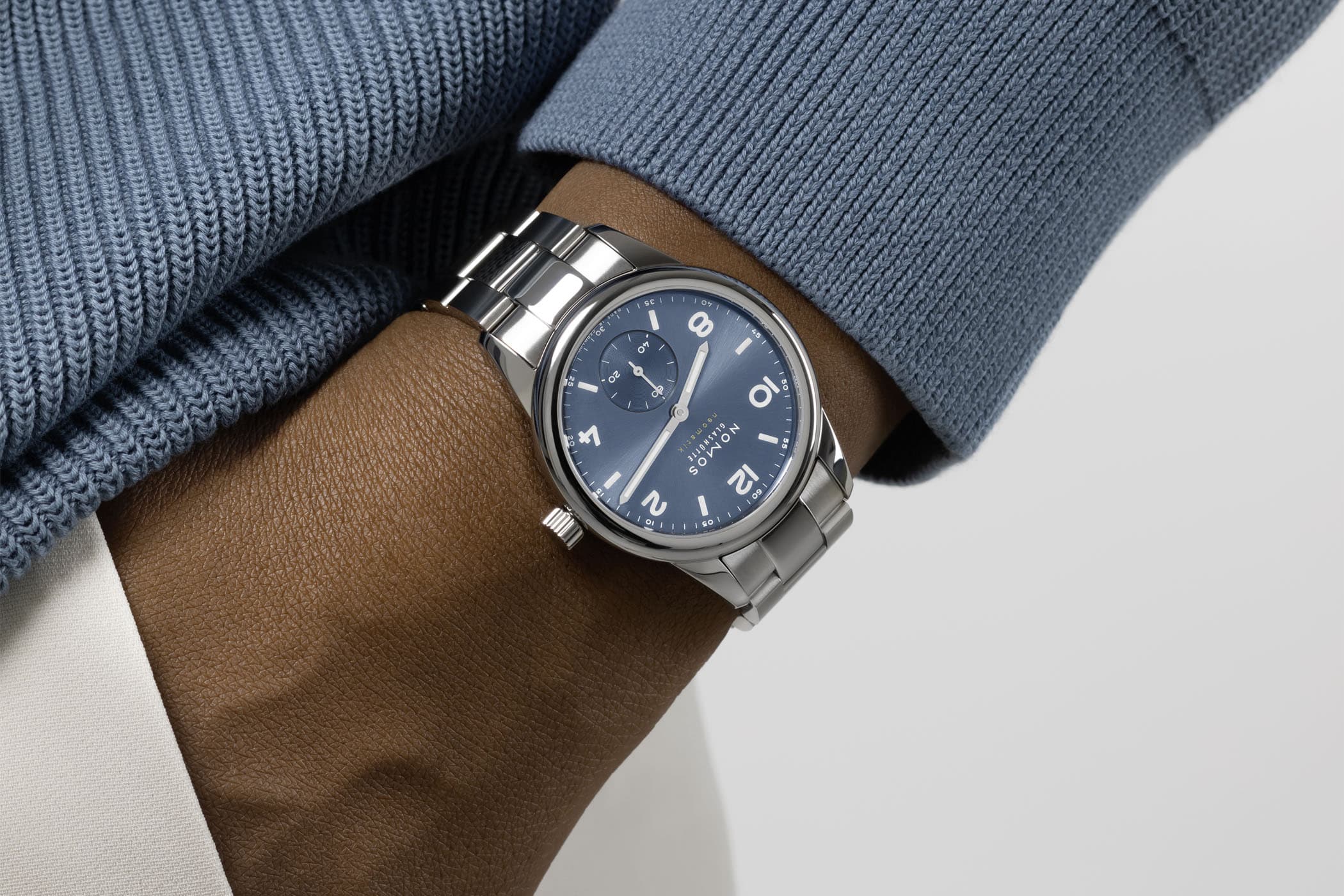
If Glashütte Original represents the classical tradition, Nomos Glashütte represents the modern, intellectual side of the best German watches. Founded just after the fall of the Berlin Wall, Nomos has become synonymous with the Bauhaus design movement—clean lines, mathematical proportions, and a refusal to add unnecessary clutter.
Models like the Tangente and the Metro have become staples for those who appreciate a watch that fits perfectly under a shirt cuff but looks equally at home in a casual wristshot on a weekend outing. Nomos is also famous for its "Swing System," an in-house escapement that signaled the brand's total independence from Swiss movement suppliers.
The beauty of a Nomos lies in its subtlety. While it might not have the aggressive presence of a diver, the long lugs and expansive dials make them wear larger than their diameter suggests. For many, a Nomos is the ultimate "office hero"—a watch that doesn't scream for attention but earns it through perfect proportions.
Sinn Spezialuhren: The Ultimate Engineering Tool
Moving away from the delicate finishing of Saxony to the functional powerhouse of Frankfurt am Main, we find Sinn Spezialuhren. If you are looking for a "beater" watch that is virtually indestructible, Sinn is the answer. Founded by flight instructor Helmut Sinn, the brand focuses on "specialty watches" designed for pilots, divers, and GSG 9 (German special forces).
The Sinn 104 is a frequent contender for the title of one of the best German watches for everyday wear. It bridges the gap between a pilot's watch and a diver, featuring a captive countdown bezel and 200 meters of water resistance. However, for the true tech-head, the Sinn U1—made from German Submarine Steel—is the gold standard.
Sinn’s proprietary technologies, such as TEGIMENT (surface hardening), Ar-Dehumidifying technology (to prevent fogging), and DIAPAL (oil-free escapements), make their watches some of the most over-engineered instruments on the market. Whether you are a professional diver or a "desk diver" who just appreciates a robust build, a Sinn offers a tactile satisfaction that few other brands can match. The lume on a Sinn U1 is legendary, ensuring legibility in the darkest depths or simply on the nightstand.
Why Choose German Over Swiss?
Choosing from among the best German watches often comes down to an appreciation for a different kind of luxury. While Swiss watches often lean into their heritage of jewelry-making and ornate decoration, German watches lean into the heritage of the engineer and the architect.
- Value Proposition: In many cases, you get more "watch" for your money. The level of movement finishing in a Glashütte Original often rivals Swiss brands that cost twice as much.
- Distinct Aesthetic: The minimalist Bauhaus look of Nomos or the instrument-cluster dial of a Sinn provides a refreshing break from the ubiquitous look of Swiss luxury sport watches.
- Independence: German brands have fought hard for their independence, developing their own hairsprings, escapements, and specialized alloys.
Conclusion
The world of German horology offers a rich spectrum of choices, from the high-art complications of Glashütte Original to the minimalist perfection of Nomos and the rugged utility of Sinn. These timepieces represent more than just a way to track the hours; they are a testament to a culture that values precision, durability, and thoughtful design above all else.
Whether you are looking for your first serious mechanical watch or a unique addition to a seasoned collection, the best German watches provide a level of character and craftsmanship that is hard to ignore. As we move further into 2025, the influence of German watchmaking continues to grow, proving that you don't need to be Swiss to be world-class.