History of the GMT-Master II: Tool to Status Symbol
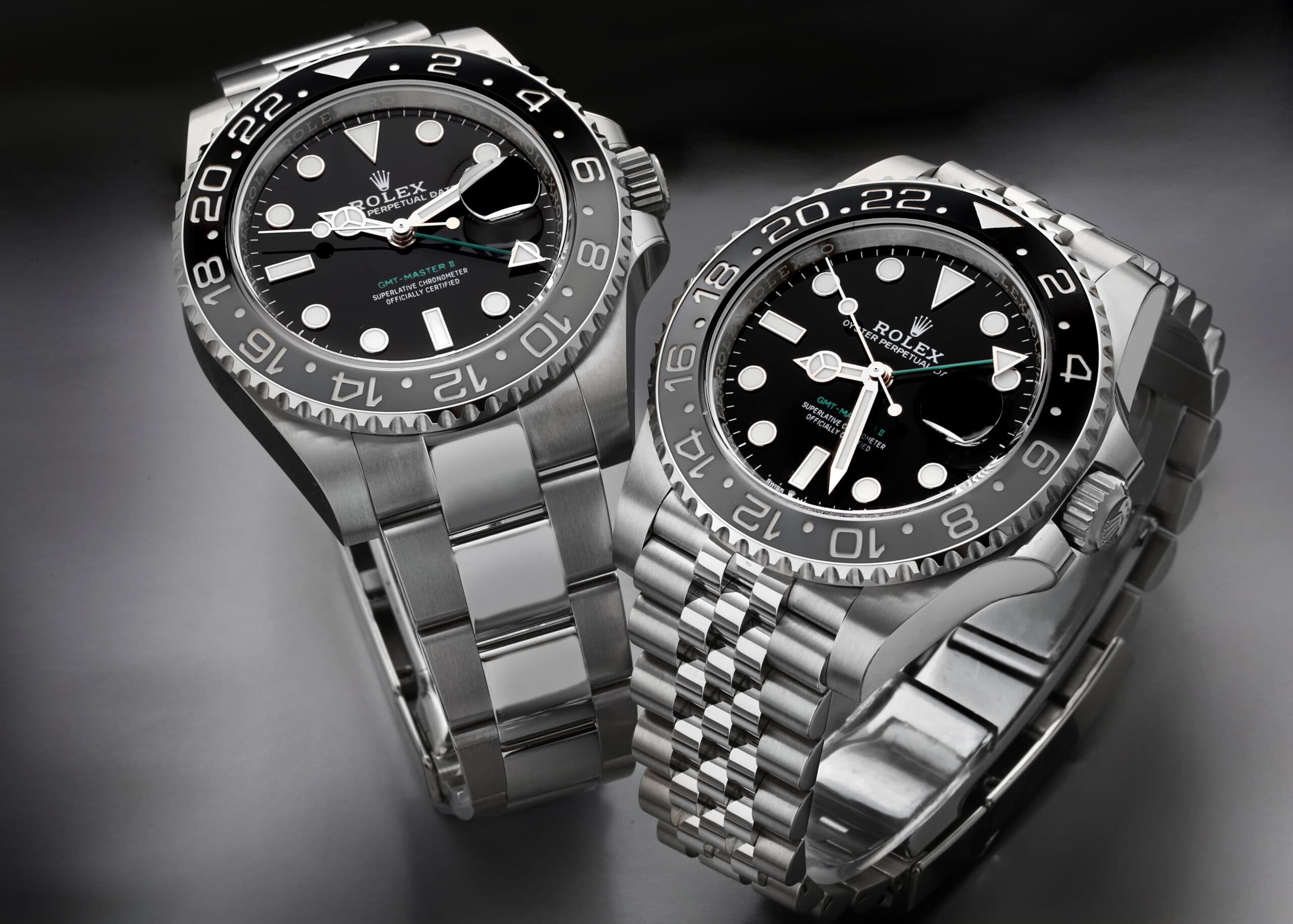
In the golden age of aviation, when the sound of jet engines first began to echo across the Atlantic, a legend was born out of necessity. Today, the Rolex GMT-Master II is arguably the most recognizable travel watch on the planet, often commanding multi-year waiting lists and soaring secondary market prices. However, to truly appreciate its current standing, one must delve into the Rolex GMT history, a journey that transitions from a functional cockpit instrument to a definitive symbol of global prestige.
The Birth of a Legend: The Pan Am Connection
The story begins in the mid-1950s. As intercontinental travel became a reality, Pan American World Airways (Pan Am) faced a unique challenge: their pilots were experiencing jet lag and disorientation due to crossing multiple time zones. They needed a timepiece that could track two time zones simultaneously. Rolex responded in 1954 with the Reference 6542.
This inaugural model featured a rotating bezel with a 24-hour scale and a dedicated 24-hour hand. By setting the bezel to offset against the local time, pilots could maintain a connection to Greenwich Mean Time (GMT). The original 6542 is a "grail" for collectors today, famously known for its fragile Bakelite bezel insert. While the Bakelite provided a beautiful depth, it was prone to cracking and was eventually replaced by aluminum. This era established the foundational DNA of the Rolex GMT history, proving that utility and legibility were the primary drivers of the design.
Evolution of the Tool: From 1675 to the 16750
In 1959, Rolex introduced the Reference 1675, a model that would enjoy a nearly 20-year production run. This was the era where the GMT-Master solidified its aesthetic. We saw the introduction of crown guards and the transition to the "Super-Lative Chronometer" designation on the dial. For many enthusiasts, the 1675 represents the peak of vintage charm, with many surviving examples exhibiting a stunning "patina" on the tritium lume plots and faded "ghost bezels" that tell stories of decades spent in the sun.
By the early 1980s, the Reference 16750 introduced the quickset date feature, making the watch significantly more practical for the everyday wearer. Yet, the watch was still viewed primarily as a "tool watch"—a reliable companion for those who lived their lives in the air or across borders.
The Paradigm Shift: The GMT-Master II and the "Fat Lady"
The most significant turning point in the Rolex GMT history occurred in 1983 with the release of the Reference 16760. This was the first "GMT-Master II." The headline innovation was the introduction of the Caliber 3085, which allowed the local hour hand to be adjusted independently of the 24-hour hand and the minute hand.
This functionality meant the watch could now track three time zones (using the independent hand and the rotating bezel). Due to the thickness of the new movement, the case was noticeably beefier, earning it the nickname "Fat Lady" or "Sophia Loren" among enthusiasts. It was also the first GMT to feature a sapphire crystal and was exclusively offered with the red and black "Coke" bezel. This transition signaled the move from a pure pilot's tool to a more sophisticated mechanical complication.
The Neo-Vintage Era: Reference 16710
For many collectors, the Reference 16710 (produced from 1989 to 2007) is the perfect "daily wearer." It slimmed down the case of the 16760 while maintaining the independent hour hand. This reference saw the transition from tritium to Luminova and finally to Super-Luminova, ensuring the "lume" remained functional for the long haul. It was during this period that the GMT-Master II began to transcend its professional roots. It wasn't just for pilots anymore; it was for the business traveler, the successful executive, and the "desk diver" who appreciated the engineering prowess of a Rolex.
The Ceramic Revolution and Modern Dominance
In 2005, celebrating the 50th anniversary of the model, Rolex changed the game again with the 116718LN (Gold) followed by the 116710LN (Steel) in 2007. Gone was the aluminum bezel, replaced by "Cerachrom"—a high-tech ceramic material that is virtually scratch-proof and resistant to fading. The case also evolved into the "Maxi Case," with thicker lugs and a larger presence on the wrist.
This era also saw the birth of modern icons like the "Batman" (BLNR) in 2013, the first time Rolex managed to create a two-tone ceramic bezel. By the time we reached the release of the 126710BLRO (the Pepsi on a Jubilee bracelet) in 2018, the GMT-Master II had officially transitioned into a global status symbol. The demand became so high that seeing one in an AD's display case became a rarity, turning the watch into a verifiable asset class.
Technical Specifications: The Modern Standard (Ref. 126710)
As of today, January 15, 2023, the current generation of the GMT-Master II represents the pinnacle of Rolex's manufacturing capabilities. Below are the technical specifications for the current stainless steel models, including the 126710BLRO, 126710BLNR, and the recently released 126720VTNR (left-handed).
| Feature | Specification |
|---|---|
| Caliber | Rolex Manufacture 3285 (Self-winding) |
| Power Reserve | Approximately 70 Hours |
| Case Material | Oystersteel (904L Stainless Steel) |
| Case Dimensions | 40mm Diameter, 12mm Thickness |
| Bezel | Bidirectional rotatable 24-hour graduated Cerachrom insert |
| Water Resistance | 100 Meters (330 Feet) |
| Complications | Independent 12-hour hand, 24-hour hand, Instantaneous Date |
| Lume | Chromalight (Blue glow) |
| Bracelet/Strap | Jubilee or Oyster with Easylink extension |
From the Cockpit to the Boardroom
When you strap on a modern GMT-Master II, you aren't just wearing a watch; you are wearing a piece of Rolex GMT history. The weight of the Oystersteel, the click of the ceramic bezel, and the effortless legibility of the dial are all results of nearly 70 years of refinement.
What started as a solution for Pan Am pilots has become a "grail" watch for many. Whether you prefer the vintage charm of a "tropical dial" 1675 or the polished perfection of a modern "Pepsi," the GMT-Master II remains the benchmark. It is a watch that feels just as at home under the cuff of a bespoke suit as it does in the cockpit of a long-haul flight.
As we look at the current landscape of the watch world in early 2023, the GMT-Master II continues to define what a luxury sports watch should be. It is durable, functional, and carries a prestige that few other models can match. It has successfully navigated the journey from a specialized tool to the ultimate status symbol, all while keeping its core identity perfectly intact. Whether you are hunting for your first "birth-year watch" or looking to add a modern icon to your collection, the GMT-Master II stands as a testament to Rolex's enduring legacy of excellence.