Independent Consolidation: The Future of Small Makers
As we navigate the final quarter of 2026, the horological landscape looks markedly different than the frenetic, speculative bubble of the early 2020s. For anyone conducting a serious Industry Analysis, the most striking trend isn’t a new movement architecture or a proprietary alloy, but rather a structural metamorphosis: the rise of independent consolidation. The era of the lone-wolf watchmaker, while romantically preserved in our collective imagination, is giving way to a more pragmatic, collaborative model that ensures the survival of artisanal craftsmanship in an increasingly volatile global economy.
For the modern collector, the "grail" watch is no longer just a piece from the 'Holy Trinity.' Instead, the focus has shifted toward the independents—those small-scale makers who offer a level of finish and soul that mass production simply cannot replicate. However, the costs of innovation, distribution, and after-sales service have skyrocketed. To combat this, we are witnessing a fascinating strategic shift where small brands are forming alliances, sharing manufacturing facilities, and even merging under boutique holding companies to maintain their creative autonomy while gaining corporate-level stability.
The End of the Solo Flight?
In our current Industry Analysis, we see that the "Independent" label is becoming more of a philosophy than a strict business definition. High-profile acquisitions, such as Chanel’s strategic stakes in F.P. Journe and Romain Gauthier, were the early tremors of this movement. By October 2026, this has evolved into a full-scale ecosystem. Brands like Czapek & Cie have led the charge in showing how community-funded models can transition into robust, vertically integrated powerhouses without losing their "indie" spirit.
Small makers are increasingly sharing the burden of R&D. We are seeing a rise in "Shared Manufacture" hubs in the Jura Valley, where three or four distinct brands utilize the same CNC machines and master finishers. This allows a brand to focus on its unique design language and complications while splitting the overhead. For the enthusiast, this means better quality control and more reliable service intervals—long the Achilles' heel of the independent sector.
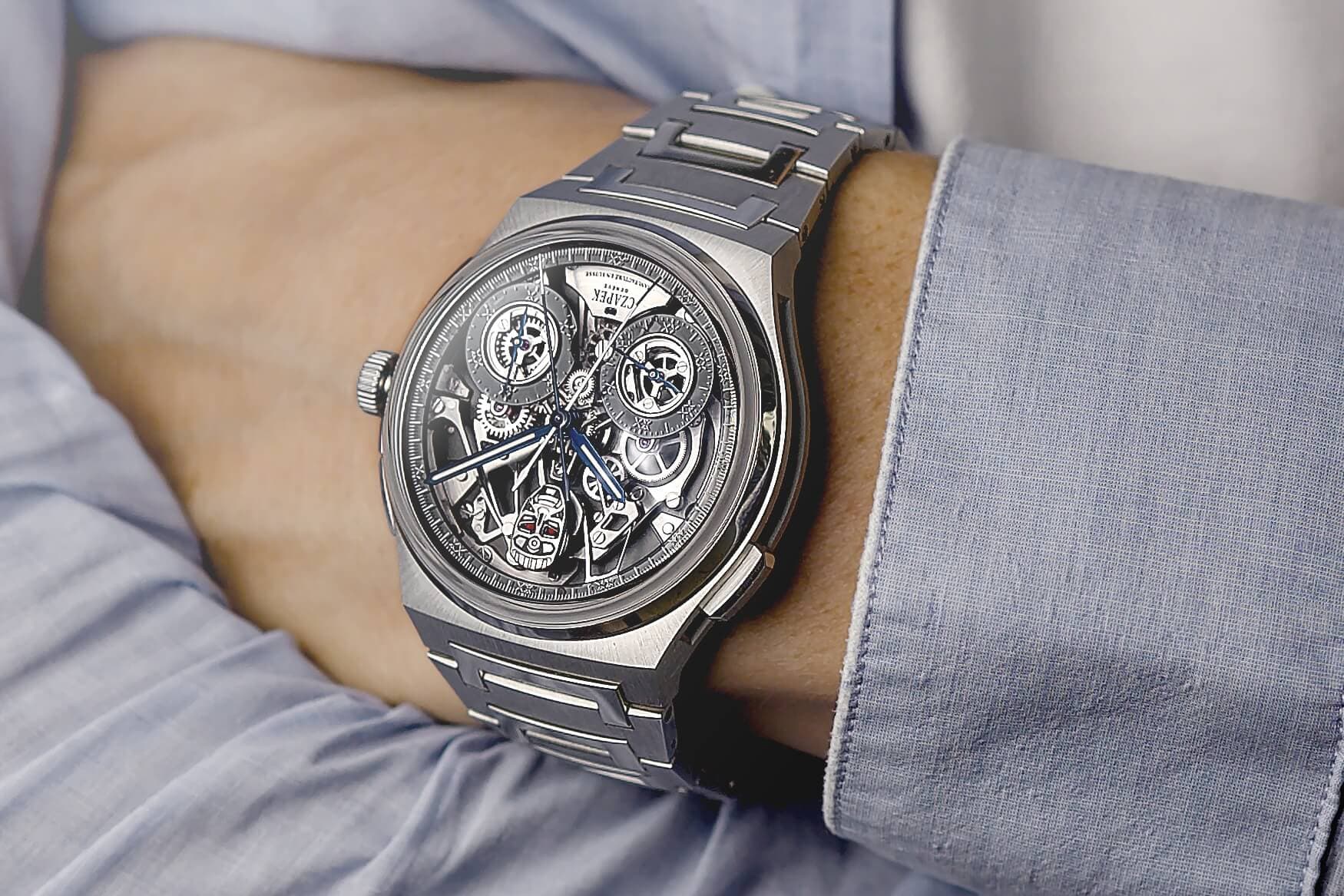
Spotlight: The Czapek Antarctique Rattrapante 'Symphony'
A prime example of this new era of consolidated excellence is the recently released Czapek Antarctique Rattrapante 'Symphony'. This piece demonstrates how a brand can leverage specialized partnerships (in this case, with Chronode) to produce a world-class complication that rivals the output of brands ten times its size. It’s a watch designed for the purist, offering a stunning open-worked dial that provides a literal window into the mechanical soul of the brand.
| Feature | Specification |
|---|---|
| Caliber | SHX6 (Bespoke Split-Seconds Chronograph) |
| Case Material | G5 Titanium or 18k 5N Rose Gold |
| Dimensions | 42.5mm Diameter, 15.3mm Thickness |
| Water Resistance | 120 Meters (12 ATM) |
| Complications | Monopusher Rattrapante (Split-Seconds), Small Seconds |
| Lume | Super-LumiNova Grade X1 on hands and indices |
| Bracelet/Strap | Integrated bracelet with "Easy Release" system and micro-adjustment |
The Collector’s Perspective: From Grails to Beaters
From the perspective of a seasoned collector, this consolidation is a double-edged sword. On one hand, the stability of these brands protects the long-term value of our investments. No one wants to own a five-figure piece of horology only to find the maker has gone bankrupt and parts are non-existent. On the other hand, there is a fear that consolidation might lead to a homogenization of design.
However, the 2026 market data suggests the opposite. By securing their financial futures, independent makers are taking more aesthetic risks. We’re seeing more adventurous use of materials, from tantalum cases to dials featuring genuine "tropical" patina achieved through controlled oxidation. The modern wristshot on social media is no longer dominated by the same three integrated-bracelet sports watches; it is a riot of color, texture, and idiosyncratic geometry.
Even the concept of the "beater" has been elevated. Enthusiasts are now looking at high-end independent microbrands for their daily wear. While a desk diver from a major conglomerate is a safe choice, a 300-meter diver from a consolidated independent collective offers a story and a level of hand-finishing that makes the mundane act of checking the time an event.
Why This Industry Analysis Matters Now
Why is this Industry Analysis critical for October 2026? Because we are at a pivot point. The "hype" buyers have largely left the building, replaced by genuine enthusiasts who care about the escapement's geometry and the beveling of the bridges. These collectors demand transparency. They want to know who made the dial, who finished the wheels, and who will be there to service the watch in 2046.
Consolidation provides the infrastructure for this transparency. When small makers share a distribution network, they can afford to open regional service centers in New York, Singapore, and Dubai. This accessibility is the final frontier for the independents. It bridges the gap between the "artisanal" and the "professional."
The Future of the Boutique Experience
We are also seeing the rise of the "Collective Boutique." Rather than a brand-specific storefront, these spaces curated by consolidated groups offer a multi-brand experience that feels more like a gallery than a retail shop. Here, the lume of a diver sits alongside the delicate hand-engraving of a dress watch. This model reduces the massive real estate costs that often cripple small brands, allowing more capital to be funneled back into watchmaking.
As we look toward 2027, the trend shows no signs of slowing. The "Big Three" may still hold the crown in terms of volume and historical weight, but the heart of innovation is beating loudest in the consolidated independent sector. They have proven that you don't need to be a billion-dollar conglomerate to provide world-class horology—you just need the right partners.
Conclusion
The landscape of independent watchmaking has matured significantly. Our Industry Analysis confirms that consolidation is not a sign of weakness, but a strategic evolution. By joining forces, small makers are securing the resources necessary to innovate while maintaining the soulful, artisanal approach that made us fall in love with them in the first place. For the collector, this means more choice, better reliability, and a future where the "grail" on your wrist is backed by a sustainable business model. The independent spirit is not disappearing; it is simply getting smarter, stronger, and more resilient for the decades to come.