The "Tiffany" Patek 5711: The 170th Anniversary Shock
The world of high-end horology has seen its fair share of seismic shifts, but few moments compare to the current atmosphere surrounding the Tiffany Patek 5711. As we sit here in August 2021, the watch community is still reeling from the announcement earlier this year that the stainless steel Nautilus 5711/1A—the most coveted watch on the planet—is officially being retired. However, the story doesn’t end with a simple discontinuation. This year marks the 170th anniversary of the historic partnership between Patek Philippe and Tiffany & Co., a bond that dates back to 1851. The intersection of this milestone and the sunset of the 5711 has created a 'shock' in the market, making the double-signed Tiffany dial the absolute pinnacle of modern collecting.
The Legend of the Double-Signed Dial
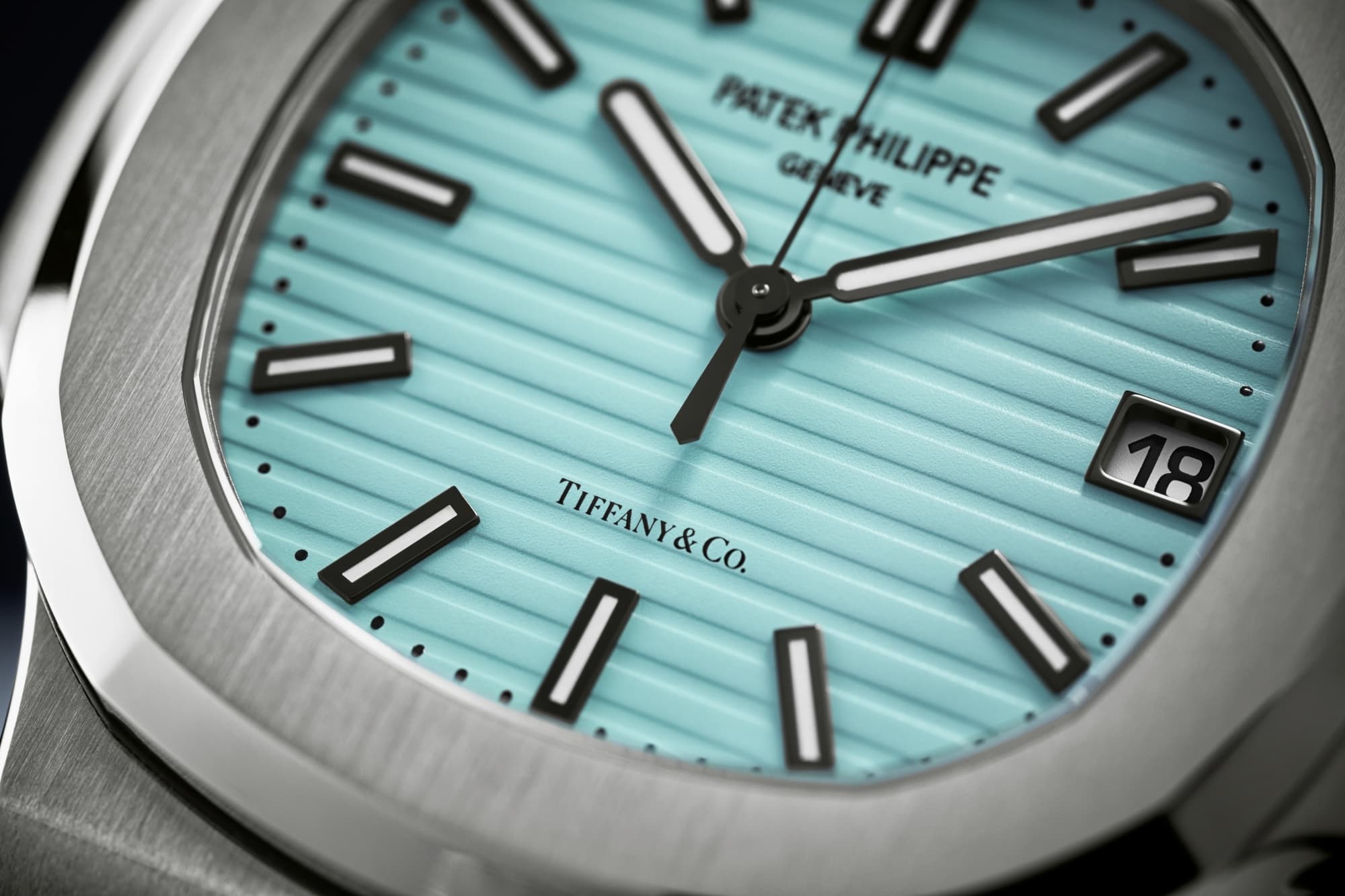
To understand why the Tiffany Patek 5711 commands such reverence, one must understand the weight of the signature at 6 o’clock. Patek Philippe began its relationship with Tiffany & Co. when Antoine Norbert de Patek met Charles Lewis Tiffany in New York. Since then, Tiffany & Co. has remained the only retailer in the world permitted to have its name printed on the dial of a Patek Philippe watch.
In the world of vintage collecting, a "double-signed" dial is often the difference between a great watch and a museum piece. Whether it’s an old Ref. 2499 or a neo-vintage 3940, that small, elegant Tiffany & Co. serif font adds a layer of provenance and exclusivity that cannot be manufactured. With the Tiffany Patek 5711, this tradition was brought into the modern era, creating a steel sports watch that felt like a piece of history the moment it left the boutique.
Why the 170th Anniversary is a Turning Point
2021 was always going to be a big year for Patek Philippe. Celebrating 170 years of any partnership is a feat, but doing so with the most prestigious jeweler in America is another level entirely. The 'shock' felt by enthusiasts this year stems from the realization that the Tiffany Patek 5711 is effectively becoming a closed chapter.
When Thierry Stern announced that the 5711 would be taking its "victory lap" this year—most notably with the olive green 5711/1A-014 released in April—collectors immediately looked toward the 170th anniversary as the next logical flashpoint. In the halls of the Salon in Geneva and the Tiffany boutiques in New York, the air is thick with speculation. Will there be one final, ultra-exclusive tribute? Even without a new release today, the existing stock of Tiffany-stamped 5711s has seen a price trajectory that defies logic, even by Nautilus standards.
Technical Specifications of the Reference 5711/1A
While the dial signature is the star of the show, the 5711 is a masterclass in engineering. Below are the technical details of the modern iteration of the Nautilus that has defined a decade of watch culture.
| Feature | Specification |
|---|---|
| Caliber | Self-winding 26-330 S C (with hacking seconds) |
| Case Material | Stainless Steel |
| Case Dimensions | 40mm (10 to 4 o’clock), 8.3mm thickness |
| Water Resistance | 120 meters (12 bar) |
| Complications | Date, Sweep Seconds |
| Dial | Horizontal embossing, Tiffany & Co. signature at 6 o’clock |
| Bracelet | Integrated Steel with fold-over nautilus clasp |
The "Grail" Status and the Secondary Market
For most collectors, the Tiffany Patek 5711 is the definition of a "grail." It is the watch you see in a perfectly lit wristshot on a private jet or at a high-stakes auction, but rarely in the metal. The scarcity is manufactured by the most rigorous vetting process in retail history. You don’t just walk into Tiffany & Co. and buy a Patek; you are chosen for the privilege.
Because of this, the secondary market has entered a state of hysteria. We’ve seen standard 5711s reach six-figure sums, but a Tiffany Patek 5711—with its original box and papers specifically from a Tiffany boutique—is in a league of its own. It represents a level of social currency that transcends mere timekeeping. It’s a piece of jewelry, a financial asset, and a horological icon all rolled into one 40mm steel case.
From Desk Diver to Auction Darling
Despite its 120 meters of water resistance, the Nautilus has long since evolved past its origins as a luxury "sports" watch. While Gérald Genta originally designed it to be worn on the decks of yachts, most 5711s today are the ultimate desk divers. They live under the cuffs of bespoke suits in boardrooms rather than being subjected to the sea.
However, that doesn't mean the watch isn't robust. The craftsmanship of the integrated bracelet, the hand-finishing of the alternating brushed and polished surfaces, and the vibrant lume of the white gold markers all speak to a watch that could handle a rugged lifestyle, even if its market value forbids it. For those lucky enough to own a vintage Tiffany Patek, the dream is often to see that slight patina develop on an older reference, but with the modern 5711, the goal is usually pristine preservation. This isn't your daily beater; it’s a piece of the 170th-anniversary legacy.
The Future of the Partnership
As we look toward the final months of 2021, the question remains: what is next for the Patek and Tiffany relationship? The 5711 is leaving the catalog, but the 170-year-old bond is stronger than ever. The 'shock' of the 5711's departure has left a void that many hope will be filled by something equally spectacular.
Whether it’s a new complication or a different model family receiving the Tiffany treatment, the Tiffany Patek 5711 will forever be remembered as the watch that broke the internet and redefined luxury in the 21st century. It proved that a simple name on a dial could change the course of horological history.
Conclusion
The Tiffany Patek 5711 remains the most discussed, debated, and desired timepiece of our era. As we celebrate the 170th anniversary of Patek Philippe and Tiffany & Co., the 'shock' of the 5711’s retirement only serves to highlight the incredible power of these two brands. It is a testament to the fact that in watchmaking, the smallest details—like a stamp of a jeweler—can create the biggest impact. For the few who possess one, it is more than a watch; it is a permanent mark of horological royalty.