Zenith Chronomaster Revival: The Attic Find Story
In the hallowed halls of horological history, few stories carry as much emotional weight or cinematic flair as the legend of the Zenith El Primero attic. It is a narrative of defiance, foresight, and the preservation of mechanical artistry against the cold, encroaching tide of the Quartz Crisis. For collectors today, holding a modern Chronomaster Revival isn't just about owning a high-beat chronograph; it is about wearing a piece of a legacy that was nearly lost to the scrap heap of history. As we sit here in August 2020, looking at the brand’s recent Manufacture Edition, the significance of that secret room in Le Locle has never been more profound.
The Hero of Le Locle: Charles Vermot’s Defiance
To understand the soul of the Zenith Chronomaster Revival, one must go back to 1975. The Zenith Radio Corporation, the American owners of the brand at the time, had decided to cease production of mechanical movements in favor of quartz technology. The order was absolute: sell the presses, tools, and technical plans for the El Primero for their weight in scrap metal.
Enter Charles Vermot, a specialist watchmaker who had overseen the construction of the El Primero since its inception in 1969. Vermot pleaded with the management to preserve the tooling, arguing that the mechanical watch would one day return. When his pleas fell on deaf ears, he took matters into his own hands. Under the cover of darkness, Vermot began secretly moving the essential cams, cutting tools, and presses to a hidden corner of the factory—the now-famous Zenith El Primero attic (or le grenier).
He walled off the section of the attic, effectively hiding the DNA of the world’s first automatic integrated high-beat chronograph movement. For nearly a decade, these tools sat in the dust, unknown to the corporate owners, waiting for the world to regain its appreciation for the ticking heart of a mechanical caliber. When Rolex eventually came knocking in the 1980s seeking a movement for their new Daytona, Zenith was able to answer the call only because Vermot handed over the keys to his secret cache.
The Discovery of the "Lost" Dials
Fast forward to the 50th anniversary of the El Primero in 2019. While the brand was already celebrating its heritage with various A384 and A386 revivals, a new discovery was made within that same fabled Zenith El Primero attic. During a cleanup of the space, a small, unassuming box was found. Inside were prototype dials from the late 1960s—dials that had never seen the light of day or a production case.
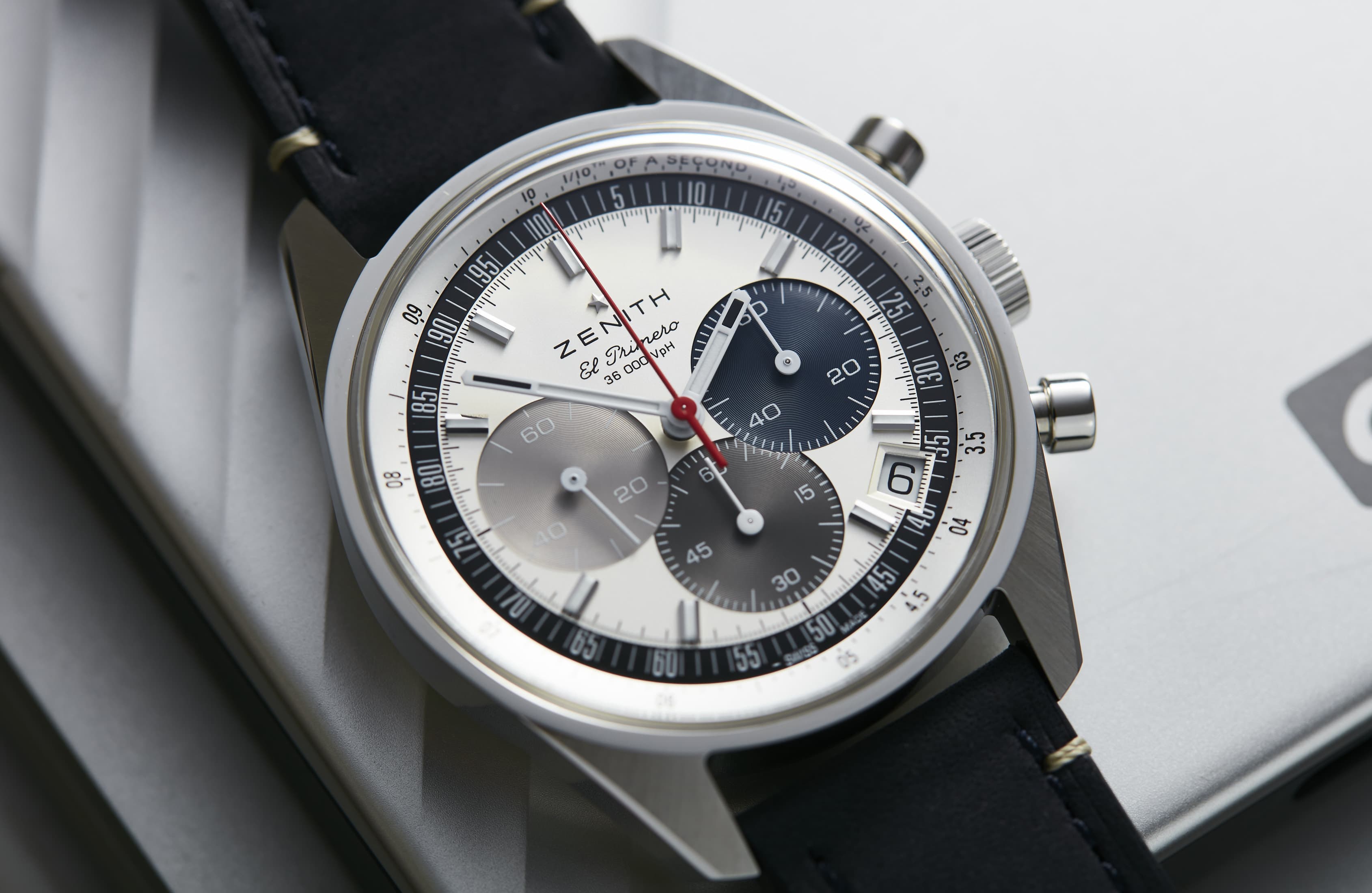
Among these was a striking tri-color design featuring three shades of blue. This discovery served as the blueprint for the Zenith Chronomaster Revival Manufacture Edition, a watch that collectors have quickly elevated to "grail" status. Unlike the traditional A386, which features silver, grey, and blue sub-dials, the Manufacture Edition pays homage to these "lost" prototypes found in the attic. It represents a direct bridge between the brand's past and its current manufacturing prowess.
Anatomy of a Revival: The Chronomaster Manufacture Edition
For the purists, the Chronomaster Revival series is a masterclass in how to execute a heritage piece. Zenith didn't just "take inspiration" from the past; they used digital blueprints of the original 1969 case to ensure every angle and facet was historically accurate. At 38mm, it avoids the bloated proportions of many modern "tribute" watches, fitting perfectly under a shirt cuff or looking right at home in a casual wristshot.
Technical Specifications
| Feature | Specification |
|---|---|
| Caliber | El Primero 400 Automatic |
| Frequency | 36,000 VpH (5 Hz) |
| Case Material | Stainless Steel |
| Dimensions | 38mm Diameter, 12.6mm Thickness |
| Water Resistance | 50 Meters (5 ATM) |
| Complications | Column-wheel Chronograph, Date, Tachymeter |
| Power Reserve | Approx. 50 Hours |
| Strap | Blue Alligator Leather with Rubber Lining |
The High-Beat Heart: Caliber 400
The movement inside is, of course, the El Primero 400. This is the direct descendant of the movement Charles Vermot saved in the Zenith El Primero attic. Beating at 36,000 vibrations per hour, the sweep of the chronograph seconds hand is noticeably smoother than the standard 28,800 VpH found in most Swiss luxury watches.
Looking through the sapphire caseback, the architecture is a joy for any enthusiast. The column-wheel mechanism is visible, providing that tactile, crisp click when engaging the pusher. There is no "stutter" here; the vertical engagement is as precise as it was in 1969. While the movement lacks the faux patina some brands use to signal age, the finishing is clean, industrial, and inherently Zenith.
On the Wrist: Aesthetics and Feel
One of the most satisfying elements of the Chronomaster Revival is the use of a box-shaped sapphire crystal. It mimics the look of the original acrylic crystals but offers the scratch resistance required for a modern beater or a daily wearer. The lume application on the faceted indices and hands is subtle—Super-LumiNova that glows with a functional green hue, ensuring legibility in low-light conditions without looking out of place on a dressier chronograph.
While some might miss the integrated ladder bracelet found on the A384 revival, the Manufacture Edition’s leather strap is exceptionally high quality. It features a rubber lining that makes it surprisingly durable, perhaps even capable of standing up to the occasional "desk diver" splash, though with 50m water resistance, you’ll want to keep this one away from the deep end.
Why the Attic Story Matters Today
In the current market, where "vintage-inspired" watches are released weekly, the story of the Zenith El Primero attic provides something that marketing budgets cannot buy: authenticity. When you look at the blue sub-dials of the Manufacture Edition, you aren't just looking at a color choice made by a contemporary design committee. You are looking at a design that was hidden in a box, protected by a man who risked his career to save the soul of his company.
For the horological journalist, the Chronomaster Revival series represents the pinnacle of the "Revival" trend. It respects the 38mm proportions that vintage collectors crave while utilizing modern manufacturing tolerances that ensure reliability. It is a watch that appeals to both the seasoned collector looking for a grail and the newcomer who wants a timepiece with a genuine story to tell.
Conclusion
The Zenith Chronomaster Revival is more than a collection of steel and gears. It is a tribute to Charles Vermot and the treasures hidden within the Zenith El Primero attic. By choosing to faithfully recreate the A386 dimensions and incorporating the "lost" dial designs found in Le Locle, Zenith has honored its past without being trapped by it.
Whether you are drawn to the high-beat 36,000 VpH frequency, the perfectly sized 38mm case, or the sheer romanticism of the Vermot story, there is no denying that these watches occupy a unique space in modern horology. They remind us that even in the face of corporate mandates and changing technologies, true craftsmanship is worth saving—sometimes even by hiding it in the attic.