Omega Constellation Observatory: Mastering Precision

For decades, the pursuit of chronometric perfection has been intrinsically linked to the sweeping motion of a seconds hand. It was the visual proof of accuracy, the heartbeat of a certified chronometer. However, as of March 2026, the horological landscape has shifted. The newly unveiled Omega Constellation Observatory collection challenges everything we thought we knew about precision testing. By introducing the first-ever two-hand watch to achieve stringent Master Chronometer certification, Omega has bridged its mid-century golden era of design with an unprecedented technological breakthrough.

A Legacy Reimagined: The Omega Constellation Observatory
Since its inception in 1952, the Constellation family has been Omega’s definitive statement on accuracy, born from the brand's sweeping victories at mid-20th-century observatory chronometer trials. While modern iterations of the Constellation have been largely defined by the integrated bracelets and "griffes" (claws) of the 1982 Manhattan design, the new Omega Constellation Observatory looks further back into the archives.
This collection strips away the 1980s aesthetic to resurrect the dramatic angularity of the 1950s. The result is a dress watch that feels incredibly fresh while remaining deeply rooted in the brand's heritage. The Omega Constellation Observatory is not just a nod to the past; it is a platform for the future of mechanical testing.
The Breakthrough: Master Chronometer Without a Seconds Hand
The most significant talking point of the Omega Constellation Observatory is what it lacks: a seconds hand. Traditionally, COSC and METAS testing protocols required a running seconds hand to visually measure rate deviations using high-speed cameras. To achieve Master Chronometer status with only an hour and minute hand, Omega had to rewrite the rulebook.
Enter the Laboratoire de Précision, an independent certification body founded by Omega in 2023 and officially accredited by METAS. To test the Omega Constellation Observatory, the laboratory developed a groundbreaking acoustic testing methodology. Using Dual Metric Technology, the movement’s acoustic signature is captured and continuously monitored over 25 days. This system tracks real-time variations in frequency, temperature, magnetism, position, and atmospheric pressure—all without relying on optical hand-tracking.
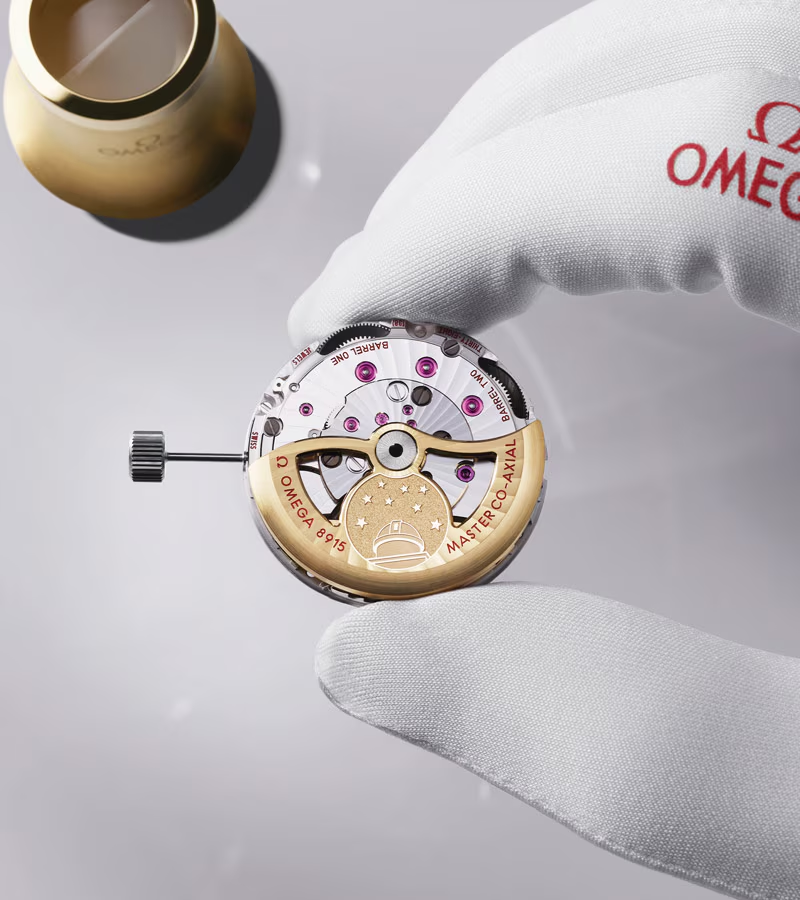
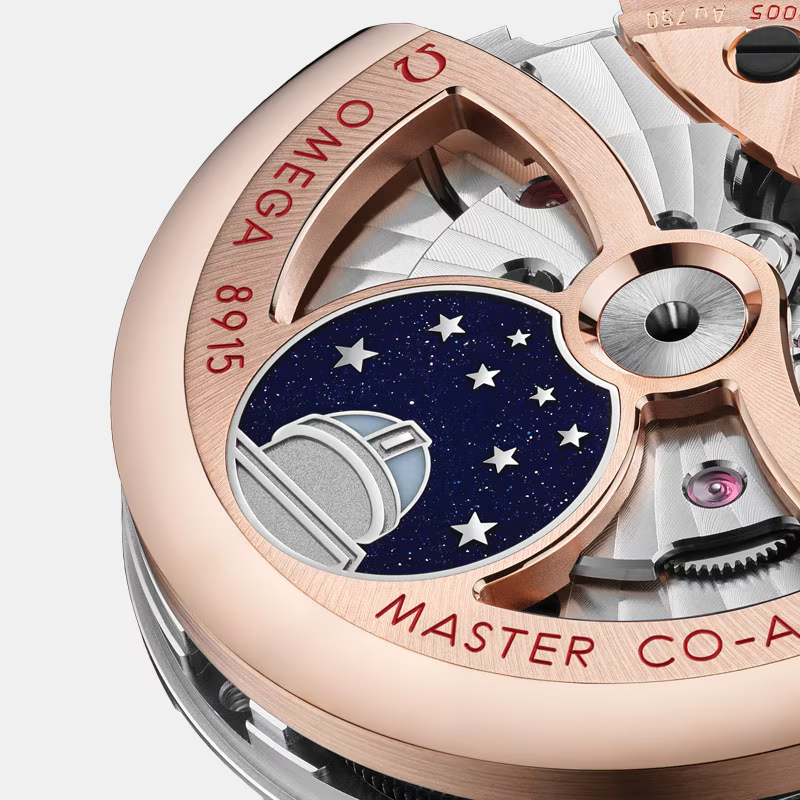
Powering these timepieces are two new in-house movements. The Calibre 8914 powers the O-MEGASTEEL models, featuring a rhodium-plated finish. The Calibre 8915 is reserved for the precious metal variants, boasting a skeletonized rotor and balance bridge crafted from 18K Moonshine™ or Sedna™ Gold. Both are visible through a sapphire exhibition caseback, which proudly displays an applied observatory medallion on the rotor base.
Design Language: Pie-Pans and Dog-Legs
Aesthetically, the Omega Constellation Observatory is a triumph of vintage revival. The case measures a contemporary 39.4mm in diameter, with a thickness of 12.23mm and a compact lug-to-lug of 47.2mm. The proportions are thoroughly modern, yet the silhouette is pure 1950s. The signature "dog-leg" lugs have returned, featuring sharp, polished facets that contrast beautifully with the limited vertical brushing on the case sides.

The dial is where the Omega Constellation Observatory truly shines. The highly stylized dodecagonal "pie-pan" dial makes a triumphant return, its outer edges sloping down toward the minute track. The applied hour markers are kite-shaped—a slightly longer and narrower evolution of the vintage "arrowhead" indices. The hour and minute hands have been reworked to subtly mirror the shape of these indices, evoking a classic dauphine style.
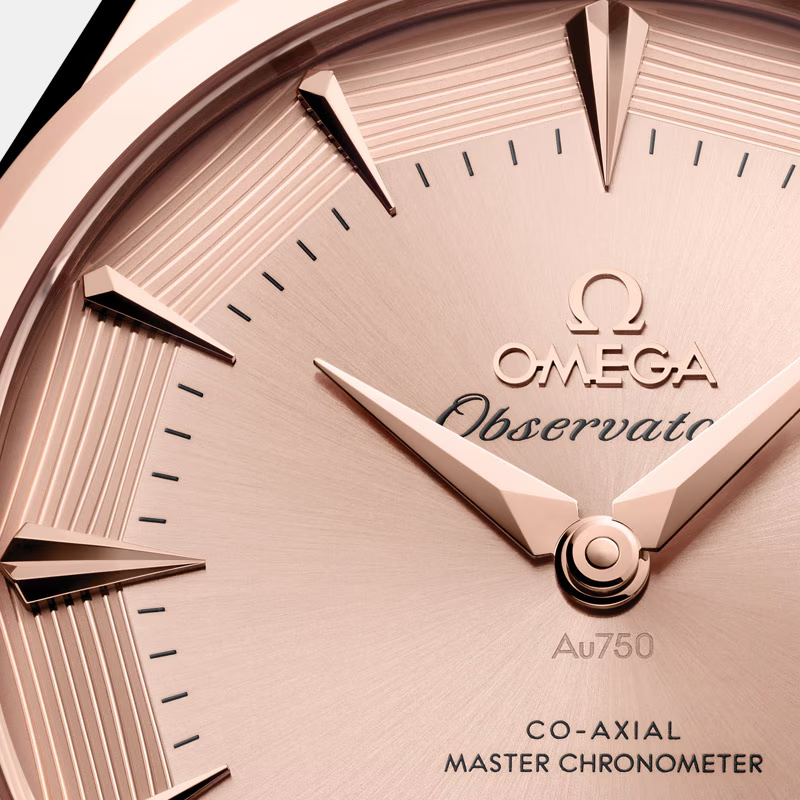
In keeping with its identity as a pure dress watch, there is no applied lume on the dial or hands. This allows the polished facets of the dial furniture to play with the light, creating a dynamic visual experience that will undoubtedly age with grace, even if it never develops the typical patina associated with vintage luminous materials.
Materials and Dials: From O-MEGASTEEL to Platinum-Gold
Omega has left no stone unturned when it comes to material execution. The Omega Constellation Observatory collection spans nine distinct references, utilizing Omega's full arsenal of proprietary alloys.
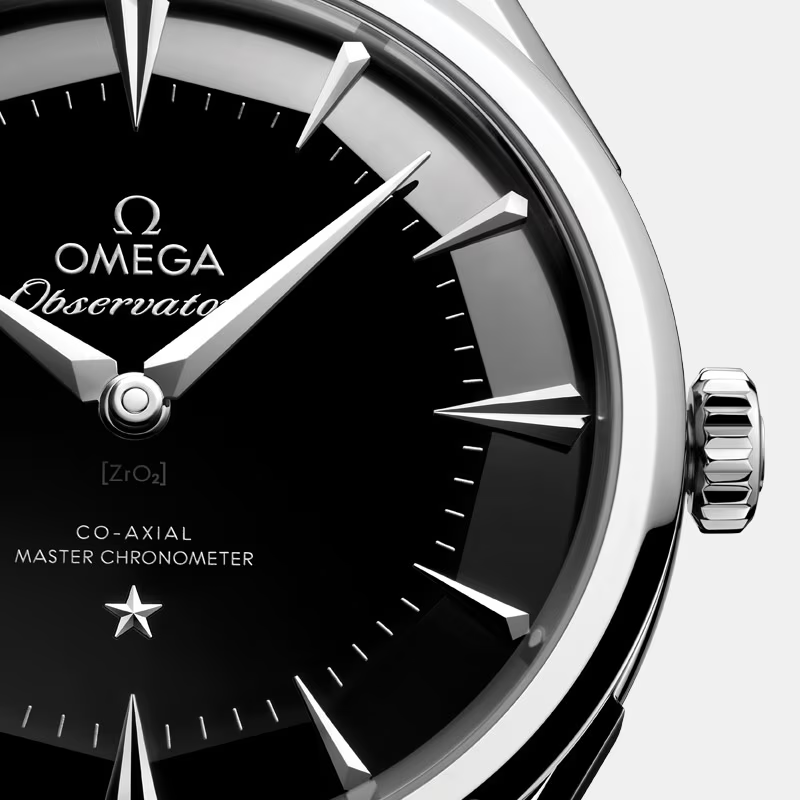
Four models are rendered in O-MEGASTEEL, Omega's ultra-resilient stainless steel alloy. Dial options include a matte silver, sunray-brushed navy, sunray-brushed green, and a technically demanding glossy black ceramic pie-pan dial.
For the purists of haute horlogerie, five precious metal variations are available. These include 18K Sedna™ Gold, 18K Canopus Gold™, and 18K Moonshine™ Gold. Perhaps the most intriguing is the Platinum-Gold edition, which pairs a brushed platinum-alloy case with a PVD-coated "yellowish platinum" dial.
The Wearing Experience
On the wrist, the Omega Constellation Observatory commands attention without shouting. The 39.4mm case is perfectly sized for modern sensibilities, while the 47.2mm lug-to-lug distance ensures it sits comfortably on a variety of wrist sizes. The lack of a sweeping seconds hand lends the watch a serene, almost philosophical presence—a reminder to appreciate the passage of time rather than tracking every passing second.
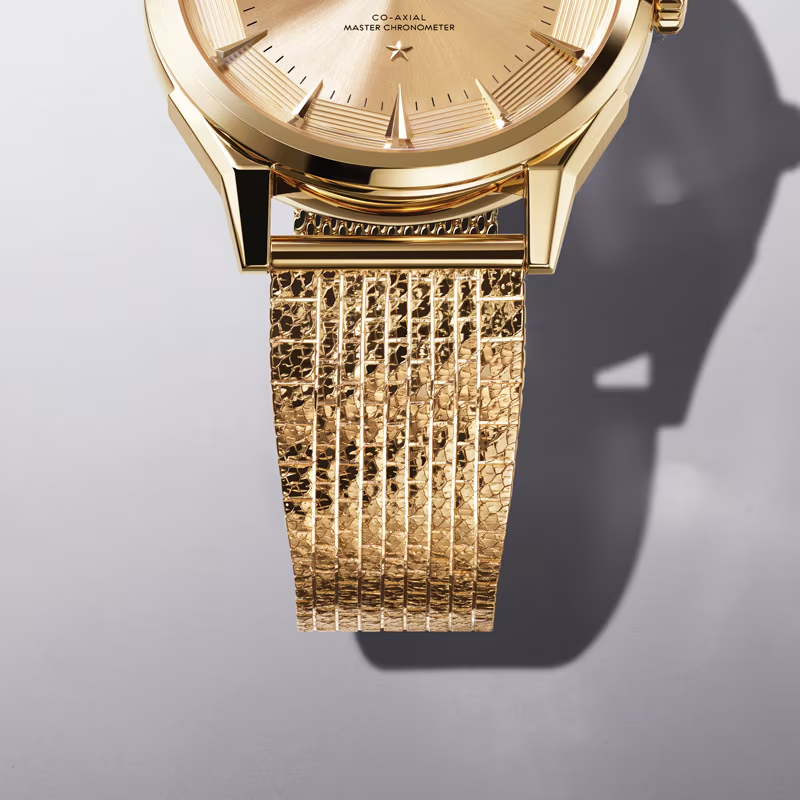
Most models are paired with an elegant alligator leather strap featuring a matching pin buckle. However, the standout piece for those seeking maximum wrist presence is the all-Moonshine Gold Omega Constellation Observatory, which comes fitted with a spectacular gold mesh bracelet featuring a vintage-inspired "brick" motif, reminiscent of the original Constellation Grand Luxe. We anticipate this specific configuration will dominate wristshot posts across enthusiast forums in the coming months.
A New Pillar in the Collection
The Omega Constellation Observatory represents a pivotal moment for the brand. By successfully merging the romanticism of a two-hand dress watch with the rigorous demands of Master Chronometer certification, Omega has created a timepiece that appeals to both vintage aesthetes and technical purists.
Priced from $10,900 for the O-MEGASTEEL variants up to $59,100 for the Moonshine Gold on a brick bracelet, the Omega Constellation Observatory asserts itself as a premium offering in Omega's catalog. It is a masterful reminder that true precision isn't just about counting the seconds—it's about making every detail count.
Technical Specifications
Specification | Details |
|---|---|
Brand | Omega |
Model | Constellation Observatory |
Reference Number | Various (O-MEGASTEEL and Precious Metals) |
Caliber | Calibre 8914 (Steel) / 8915 (Precious Metal) - Master Chronometer |
Power Reserve | Not specified |
Case Material | O-MEGASTEEL, 18K Sedna™ Gold, 18K Moonshine™ Gold, 18K Canopus Gold™, Platinum-Gold |
Diameter | 39.4mm |
Thickness | 12.23mm |
Lug-to-Lug | 47.2mm |
Water Resistance | 30 meters |
Price (USD) | $10,900 - $59,100 |