The Sustainability Audit: Which Brands are Green?
For decades, the luxury watch industry was defined by its weight in gold and the exclusivity of its rare materials. However, as we navigate the final quarter of 2025, the narrative has shifted decisively from "conspicuous consumption" to "conscious craftsmanship." Finding sustainable watch brands is no longer a niche pursuit for the eco-conscious collector; it has become a central pillar of the modern horological "grail" hunt. Today, a watch’s provenance is just as important as its power reserve, and its environmental footprint is scrutinized as closely as its finishing.
In this 2025 Sustainability Audit, we peel back the sapphire crystals to see which manufactures are genuinely innovating and which are merely performing "greenwashing." From recycled case metals to lab-grown gemstones and vegan straps, the landscape of ethical horology has never been more vibrant.
The Material Revolution: Beyond Virgin Ore
The most significant impact a watch brand can have is through its choice of materials. Traditionally, mining for gold and steel has been an ecologically taxing process. However, the industry’s heavy hitters are finally turning the tide.
Chopard led the charge by committing to 80% recycled steel for all its steel watches, a move they call "Lucent Steel." Not only does this reduce the carbon footprint, but the resulting alloy is harder and more lustrous—perfect for those who want their daily wearer to maintain its brilliance without an early patina. Similarly, Panerai has doubled down on its eSteel™ initiative, utilizing scrap steel from various industries to create cases that are chemically identical to traditional 316L, yet far more responsible.
For the enthusiast looking for a rugged beater that doesn't cost the Earth, these recycled alloys offer the same structural integrity required for a 300m water-resistant desk diver while significantly lowering the energy required for production.
Oris: The Pioneer of "Change for the Better"
When discussing sustainable watch brands, Oris is often the first name on a collector’s lips. Their "Change for the Better" campaign isn't just a marketing slogan; it is a fundamental part of their business model. By 2025, Oris has achieved climate neutrality and continues to partner with organizations like the Billion Oyster Project and various reef restoration programs.
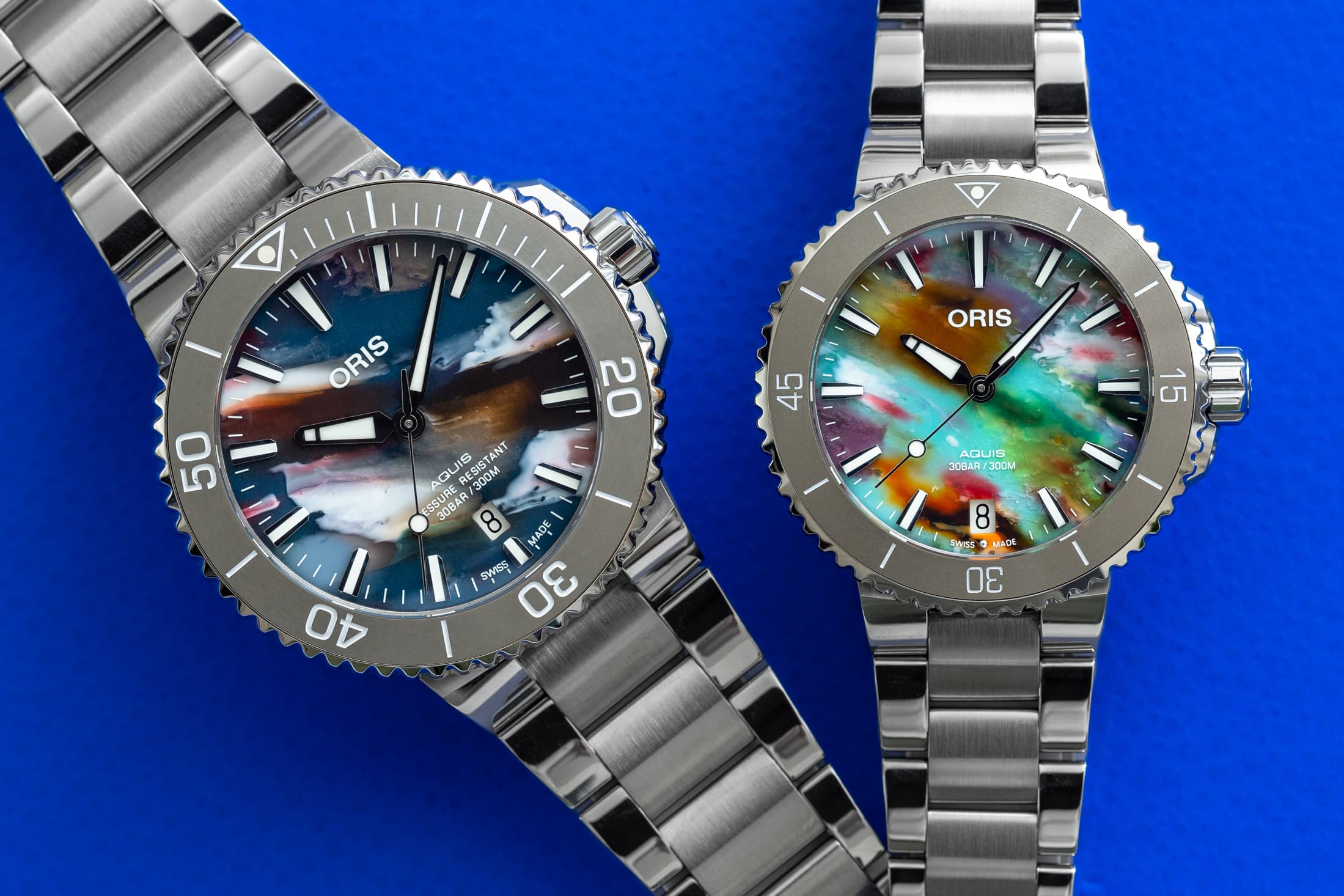
The standout in their catalog remains the Aquis Date Upcycle. Each dial is made from recycled PET plastic, meaning no two watches are identical. It’s a rare instance where a mass-produced luxury watch offers a unique aesthetic—a "piece unique" for the environmentally aware. Below are the technical specifications for the latest 2025 iteration featuring their in-house movement.
Technical Specifications: Oris Aquis Date Upcycle (Calibre 400)
| Feature | Specification |
|---|---|
| Caliber | Oris Calibre 400 (Automatic, 5-day power reserve) |
| Case Material | Multi-piece stainless steel (partially recycled) |
| Dimensions | 41.5mm diameter; 13.2mm thickness |
| Water Resistance | 30 bar (300 meters) |
| Complications | Date, Hacking Seconds, Antimagnetic |
| Bracelet/Strap | Multi-piece stainless steel bracelet with folding clasp |
| Dial | Recycled PET plastic (unique patterns) |
Transparency and the Supply Chain: IWC and Breitling
Transparency is the bedrock of sustainability. IWC Schaffhausen has set the industry gold standard by releasing biennial sustainability reports that adhere to Global Reporting Initiative (GRI) standards. Their focus on "responsible sourcing" ensures that every gram of gold and every diamond can be traced back to its origin.
Breitling has taken a more radical approach by transitioning entirely to lab-grown diamonds and artisanal small-scale gold. For the collector, this means the "sparkle" on a Navitimer’s bezel comes without the ethical baggage of traditional mining. This shift toward lab-grown stones is a controversial topic among purists, but in 2025, the market sentiment has clearly shifted toward ethical origin over geological rarity.
The Rise of Circular Horology: ID Genève
While the giants of the industry are turning a large ship, smaller independent sustainable watch brands like ID Genève are built on circularity from the ground up. Using 100% recycled steel melted in solar furnaces and movements refurbished from unsold stock, they have created a blueprint for the future.
Their watches are designed to be fully disassembled and recycled at the end of their life cycle. For many enthusiasts, an ID Genève piece has become a "grail" not because of its price tag, but because of its uncompromising commitment to the planet. Their aesthetic—often featuring raw textures and exposed recycled components—looks incredible in a wristshot, proving that sustainability has a high-design edge.
Straps, Packaging, and the "Vegan Leather" Wave
It isn't just the watch head that is changing. The traditional alligator strap—once the hallmark of a luxury dress watch—is being replaced by innovative alternatives. IWC’s Miratex™ (a plant-based, plastic-free material) and Oris’s Cervo Volante sustainable deer leather are leading the way. These materials are remarkably durable and develop a character over time that rivals traditional hides.
Furthermore, the "box and papers" experience has been slimmed down. In 2025, the massive lacquered wood boxes that used to sit in the back of closets are being replaced by modular, recycled travel pouches. This reduces shipping weight and waste, proving that luxury can be lightweight.
What to Look for in a Sustainable Watch
If you are looking to add an eco-friendly piece to your collection, consider these three criteria:
- Material Provenance: Does the brand specify the percentage of recycled steel or the origin of its precious metals?
- Movement Longevity: A mechanical movement is inherently sustainable because it can be repaired for generations. Avoid "disposable" quartz movements in favor of high-quality calibers with long service intervals.
- Third-Party Certification: Look for B-Corp certification or memberships in the Responsible Jewellery Council (RJC).
Whether you are looking for a high-performance desk diver with a recycled dial or a sophisticated dress watch with traceable gold, the options for sustainable watch brands have never been more diverse or technically impressive.
Conclusion
The horological world has reached a tipping point where ethics and aesthetics are no longer mutually exclusive. As we’ve seen from the efforts of Oris, IWC, and Panerai, the industry is proving that it can honor its heritage while protecting its future. Choosing a sustainable timepiece isn't just about the environment—it's about supporting the innovation that will keep mechanical watchmaking relevant for the next century. As you consider your next acquisition, remember that the most sustainable watch is the one that will last a lifetime, passed down from one generation to the next, carrying with it a story of responsibility and timeless style.