Rolex Deepsea Challenge: 11,000m of Titanium
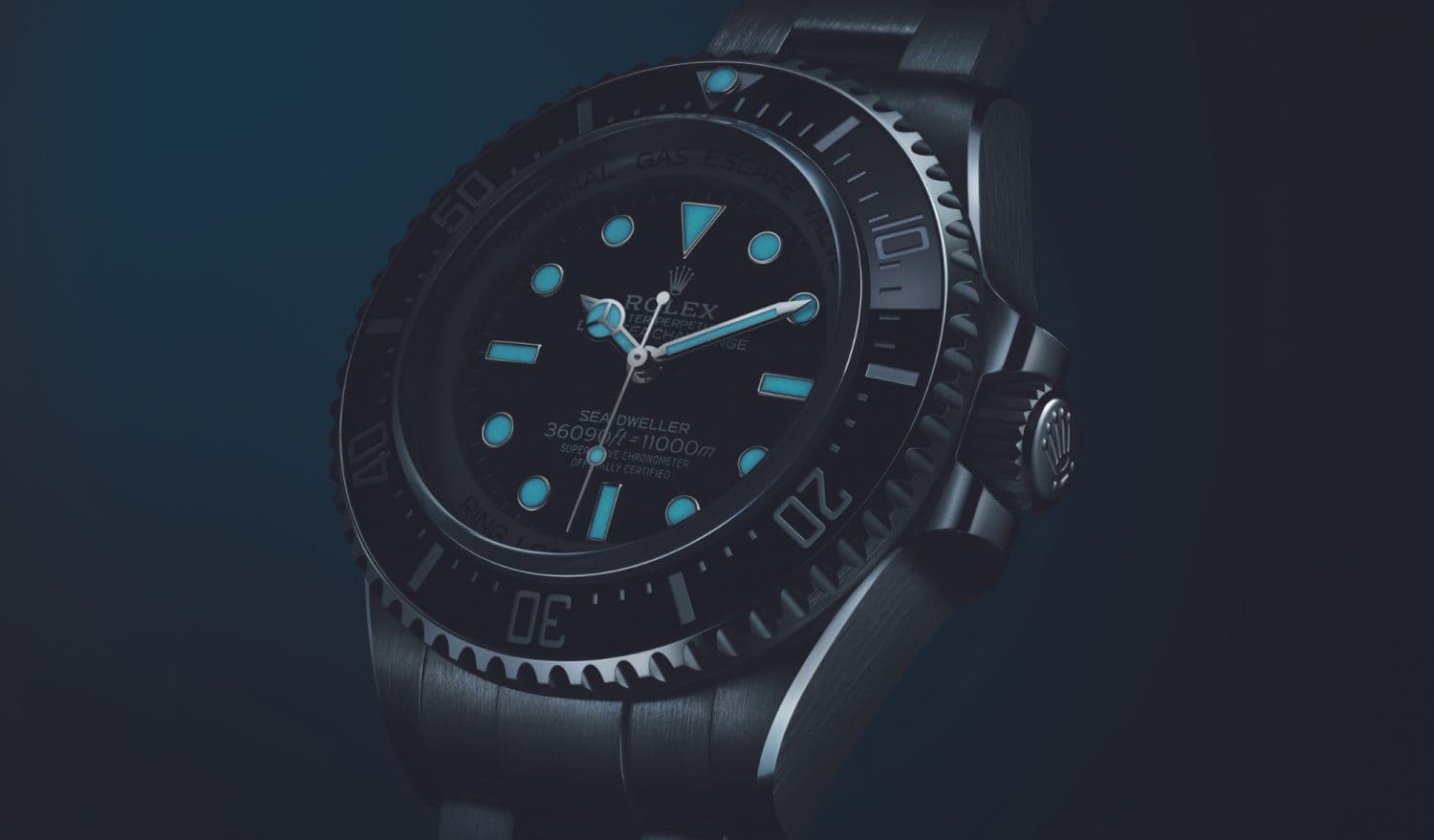
When it comes to the world of horology, few names carry the weight of the crown. Today, June 15, 2022, Rolex has once again redefined the limits of mechanical engineering with a release that feels less like a timepiece and more like a piece of deep-sea exploration equipment. The Rolex Deepsea Challenge has finally transitioned from an experimental prototype strapped to the outside of a submersible to a commercial reality, and it brings with it a monumental first for the Geneva-based manufacture: the extensive use of RLX Titanium.
For years, collectors have whispered about the "grail" of diving watches—the experimental piece that accompanied James Cameron to the bottom of the Mariana Trench in 2012. While that watch was a 904L steel behemoth that was virtually unwearable for anyone without the forearm of a superhero, the new Rolex Deepsea Challenge seeks to balance extreme capability with a material innovation that makes its 50mm diameter surprisingly manageable.
A Legacy of Deep-Sea Dominance
To understand the Rolex Deepsea Challenge, one must look back at the history of the brand’s relationship with the abyss. In 1960, the experimental Deep Sea Special accompanied Jacques Piccard and Don Walsh to the bottom of the Challenger Deep in the Trieste submersible. Decades later, in 2012, the original Deepsea Challenge concept watch repeated the feat with James Cameron.
However, those watches were never meant for the boutique shelf. They were massive, thick-domed instruments designed for a singular purpose. The new Rolex Deepsea Challenge represents the culmination of those experiments, refined into a production model that, while massive, showcases Rolex’s technical prowess in a way that will make any tool watch enthusiast’s heart race.
The Arrival of RLX Titanium
The most significant talking point of this new release is the material. Rolex has long been a staunch proponent of its proprietary 904L steel (Oystersteel), but for a watch of this scale, steel would simply be too heavy for a standard wristshot. Enter RLX Titanium.
RLX Titanium is a Grade 5 titanium alloy specifically selected by Rolex for its lightness and resistance to deformation and corrosion. By using this material for the case and bracelet, Rolex has managed to reduce the weight of the watch by approximately 30% compared to the experimental steel version. This isn't just a "beater" you throw on for a weekend at the beach; it is a sophisticated engineering marvel that utilizes a satin finish to emphasize its tool-watch DNA. The visible grain in the titanium gives it a rugged, purposeful look that contrasts beautifully with the polished edges of the lugs.
Engineering the 11,000-Meter Rating
How does a watch survive the crushing pressure of 11,000 meters (36,090 feet)? The Rolex Deepsea Challenge employs the patented Ringlock system. This reinforced case architecture includes a nitrogen-alloyed steel compression ring that supports the nearly 10mm thick sapphire crystal and the titanium case back.
Every single Rolex Deepsea Challenge is tested in a special hyperbaric tank developed in conjunction with Comex (Compagnie Maritime d'Expertises). To meet the ISO 6425 standards for diver’s watches, Rolex tests these pieces to a pressure equivalent to 13,750 meters—25% more than the depth guaranteed on the dial. This isn't just a "desk diver"; it is a piece of equipment that could literally survive at the bottom of the world while you're comfortably having lunch on the surface.
Technical Specifications
| Feature | Specification |
|---|---|
| Caliber | Rolex Manufacture Calibre 3230 |
| Case Material | RLX Titanium (Grade 5) |
| Dimensions | 50mm Diameter, 23mm Thickness |
| Water Resistance | 11,000 Meters (36,090 Feet) |
| Bezel | Unidirectional 60-minute Cerachrom in Ceramic |
| Lume | Chromalight (Blue glow) |
| Bracelet | RLX Titanium Oyster with Glidelock and Fliplock |
| Power Reserve | Approximately 70 Hours |
Wearability and Aesthetics
Let’s address the elephant in the room: the size. At 50mm wide and 23mm thick, the Rolex Deepsea Challenge is a massive presence. However, the use of titanium is a game-changer. On the wrist, the weight reduction is immediately noticeable. While it won't be sliding under any shirt cuffs anytime soon, the Oyster bracelet equipped with the Glidelock and Fliplock extension systems ensures that it can be worn over a thick 7mm diving suit or adjusted for a warm day when your wrist expands.
The dial is a masterclass in legibility. The intense black matte finish prevents reflections, while the large Chromalight hour markers provide a long-lasting blue lume that is essential in the pitch-black conditions of the deep ocean. Unlike the Deepsea Sea-Dweller, the Challenge does not feature a date window, maintaining perfect symmetry and ensuring no weak points in the crystal or movement architecture for the sake of a complication.
The Calibre 3230
Inside the titanium fortress beats the Calibre 3230. This self-winding mechanical movement is at the forefront of Rolex’s watchmaking technology. It features the Chronergy escapement, which combines high energy efficiency with great dependability. Made of nickel-phosphorus, it is also insensitive to magnetic fields. With a 70-hour power reserve, you can set the watch down on a Friday evening and it will still be ticking perfectly on Monday morning—though we suspect owners of this piece won't want to take it off that easily.
A New Chapter for Watch and Heritage
In the context of Rolex’s heritage, the Rolex Deepsea Challenge is a bridge between the past and the future. It honors the brave explorers of the 20th century while utilizing the materials of the 21st. The transition to titanium marks a pivotal moment for the brand. Many enthusiasts have wondered if we would ever see a titanium Rolex outside of the Tudor Pelagos line or rare prototypes. Now, we have our answer.
This watch isn't for everyone. It’s a niche product for the serious collector, the professional diver, or the enthusiast who wants the absolute pinnacle of what is mechanically possible. It is a statement piece that says, "We can go anywhere."
Final Thoughts
The Rolex Deepsea Challenge is more than just a watch; it is a testament to human curiosity and the relentless pursuit of perfection. By bringing the 11,000-meter depth rating to a production titanium case, Rolex has silenced any doubts about their commitment to the professional tool watch category. While most will never see depths greater than the bottom of a swimming pool, knowing that your watch could survive the weight of the entire ocean is a powerful allure that only a brand like Rolex can truly deliver.
Whether you view it as a wearable piece of history or the ultimate expression of modern horology, there is no denying that the Rolex Deepsea Challenge has set a new benchmark that will be discussed for years to come. It is a bold, uncompromising, and technically flawless addition to the Oyster Perpetual family.