Japanese Value: Why GS is Winning the $50k Segment
As we approach the final weeks of 2025, the landscape of high-end horology has undergone a seismic shift that few traditionalists saw coming a decade ago. While the 'Holy Trinity' of Swiss watchmaking continues to command respect, the discerning collector’s eye has increasingly turned toward the Shiojiri and Morioka studios. The perennial debate of Grand Seiko vs Swiss has moved beyond the 'value-for-money' entry-level discussions and into the upper echelons of the $50,000 to $100,000 price bracket. In this segment, where technical mastery meets artisanal storytelling, Grand Seiko is no longer just a participant; they are increasingly the pacesetter.
The Shifting Tide of the $50,000 Bracket
For years, the $50,000 mark was the exclusive playground of gold perpetual calendars from Geneva or integrated-bracelet sport icons from Le Brassus. However, the market fatigue surrounding 'hype' watches and the artificial scarcity of certain Swiss models has led enthusiasts to look for substance over status. This is where the Grand Seiko vs Swiss rivalry takes an interesting turn. Collectors are realizing that while a Swiss heavy-hitter might offer brand recognition at a cocktail party, a Grand Seiko Masterpiece provides a level of hand-finishing that typically requires a six-figure investment in the Swiss Alps.
In 2025, the "Japanese Value" proposition has evolved. It’s no longer about being the cheaper alternative; it's about providing superior horological density. When you spend $50,000 on a Grand Seiko, you aren't paying for a marketing budget; you are paying for the time of a master engraver in the Micro Artist Studio who might only produce a handful of cases per year.
The Micro Artist Studio: Where Japan Meets the Stars
To understand why Grand Seiko is winning, one must look at the Masterpiece Collection. These watches are the antithesis of the mass-produced luxury we often see in the Swiss mainstream. The SBGZ series, for instance, features movements and cases finished by the same hands that produce the legendary Credor Eichi II.
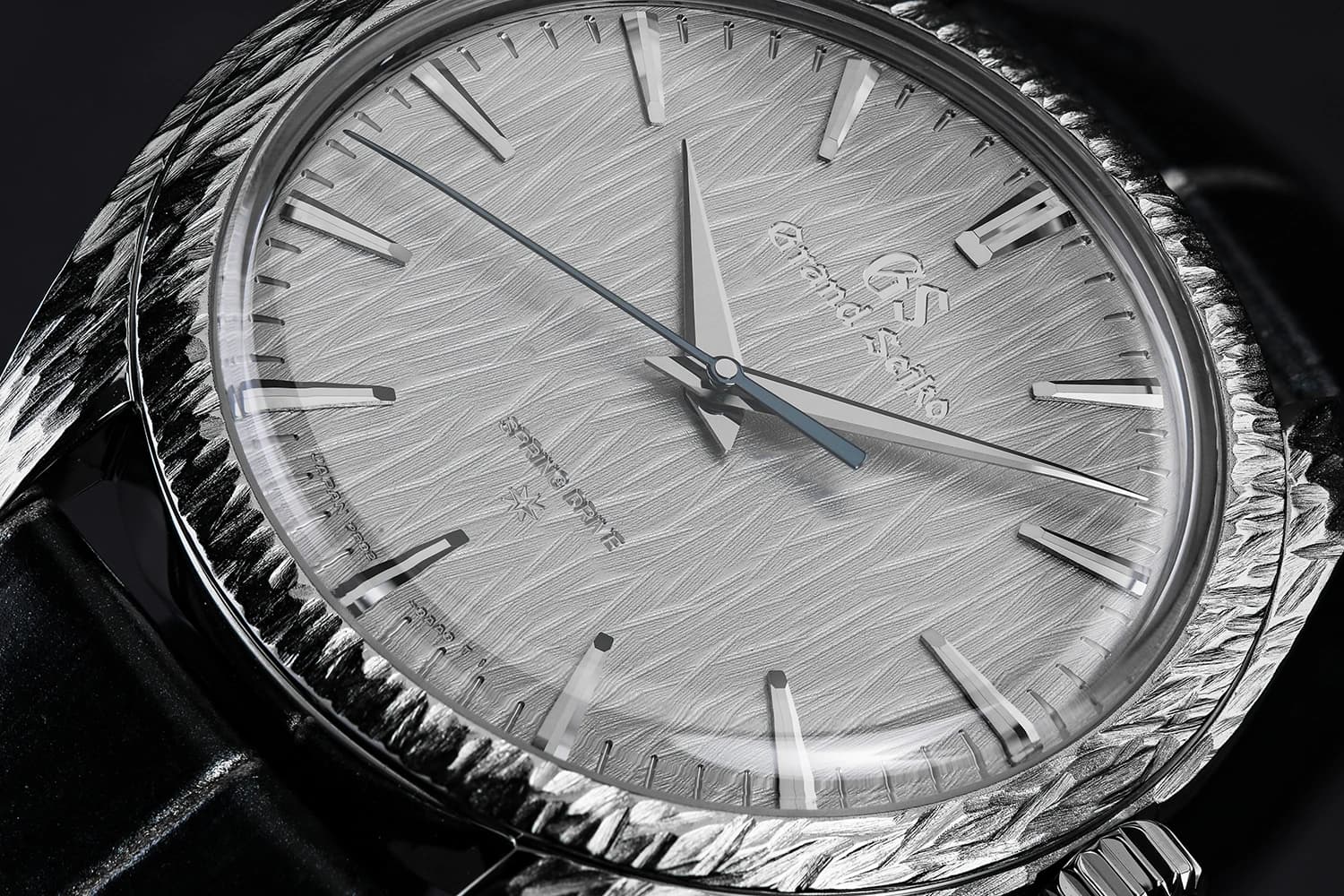
In the context of Grand Seiko vs Swiss high-horology, the distinction lies in the philosophy of Kodo (heartbeat) and Nature. While Swiss brands often focus on the architectural perfection of the movement, Grand Seiko integrates the environment. The 2025 releases have doubled down on this, utilizing hand-engraved platinum cases that mimic the wind-swept snow of the Shinshu region—a level of detail that makes a standard 'grail' watch from a Swiss competitor look almost industrial by comparison.
Technical Excellence: The Masterpiece SBGZ009
The SBGZ009 serves as a perfect case study for this market dominance. Featuring the Caliber 9R02, it offers a level of finishing that rivals Philippe Dufour (who famously consulted for the Micro Artist Studio). Let’s look at the specifications that make this piece a heavyweight contender.
| Feature | Specification |
|---|---|
| Caliber | 9R02 Manual-Wind Spring Drive (Micro Artist Studio) |
| Case Material | Platinum 950 (Fully Hand-Engraved) |
| Dimensions | 38.5mm Diameter x 9.8mm Thickness |
| Water Resistance | 30 Meters |
| Complications | Power Reserve Indicator (Caseback), Dual Spring Barrel |
| Bracelet/Strap | Hand-stitched Crocodile with Platinum 950 Clasp |
This isn't just a watch; it's a technical statement. The 84-hour power reserve, achieved through the Torque Return System, showcases an engineering prowess that challenges the best of the Grand Seiko vs Swiss movement comparisons.
Zaratsu vs. Swiss: The Battle of the Polish
One cannot discuss Japanese watchmaking without mentioning Zaratsu finishing. While Swiss brands utilize high-end anglage (chamfering), Grand Seiko’s distortion-free mirror polishing creates a play of light and shadow that is central to Japanese aesthetics. In the $50,000 segment, this is often applied to precious metals like Platinum or 18k Rose Gold.
For the enthusiast who loves a good wristshot, the way a Grand Seiko Evolution 9 case catches the light is incomparable. Even the "lume" application—or lack thereof on dressier models—is handled with a level of intentionality that makes the watch feel more like jewelry and less like a tool. While some might miss the glow of a "beater" or a "desk diver," the razor-sharp hands of a high-end GS are diamond-cut to reflect even the dimmest light, ensuring legibility without the need for luminous paint that might develop an uneven "patina" over the decades.
The Investment Logic: Why Collectors are Turning East
The market in 2025 has become more sophisticated. The modern collector is less concerned with the secondary market 'flip' and more concerned with the 'grail' status of their acquisition. The Grand Seiko vs Swiss debate is being won by Japan because of transparency and accessibility to true craft.
When you purchase a high-complication Swiss piece, you are often met with 'application only' lists and years of waiting. Grand Seiko, while still producing these Masterpiece models in extremely limited quantities, rewards the enthusiast who appreciates the craft rather than the one with the longest purchase history. This democratic approach to high-horology has fostered a loyal community that values the "shokunin" (craftsman) spirit over the corporate boardroom.
Spring Drive: The Silent Killer
Finally, the Spring Drive movement remains Grand Seiko's 'ace in the hole.' While the Swiss have perfected the traditional lever escapement, the Spring Drive offers a poetic representation of time with its glide motion seconds hand. In a $50,000 watch, collectors are looking for a soul. The silent, smooth sweep of a 9R-series caliber provides an emotional connection to the passage of time that a ticking Swiss mechanical movement—no matter how high-beat—simply cannot replicate.
Conclusion
The shift we are witnessing in late 2025 is not a fad; it is a correction. For too long, the Swiss industry rested on its laurels, relying on heritage and brand equity to justify price hikes. Grand Seiko has forced the hand of the entire industry by proving that world-class finishing, innovative movement technology, and deep cultural storytelling don't have to be exclusive to the Jura Mountains.
In the high-stakes world of Grand Seiko vs Swiss horology, Japan is winning the $50,000 segment by offering more than just a watch—they are offering a masterpiece of time itself. Whether you are looking for your next 'grail' or simply want a piece that stands up to the scrutiny of a loupe, the path to the East has never been more compelling. As we look toward 2026, one thing is certain: the crown is no longer the only symbol of royalty in the watch world.