Baltic Prismic: The Art Deco Revival
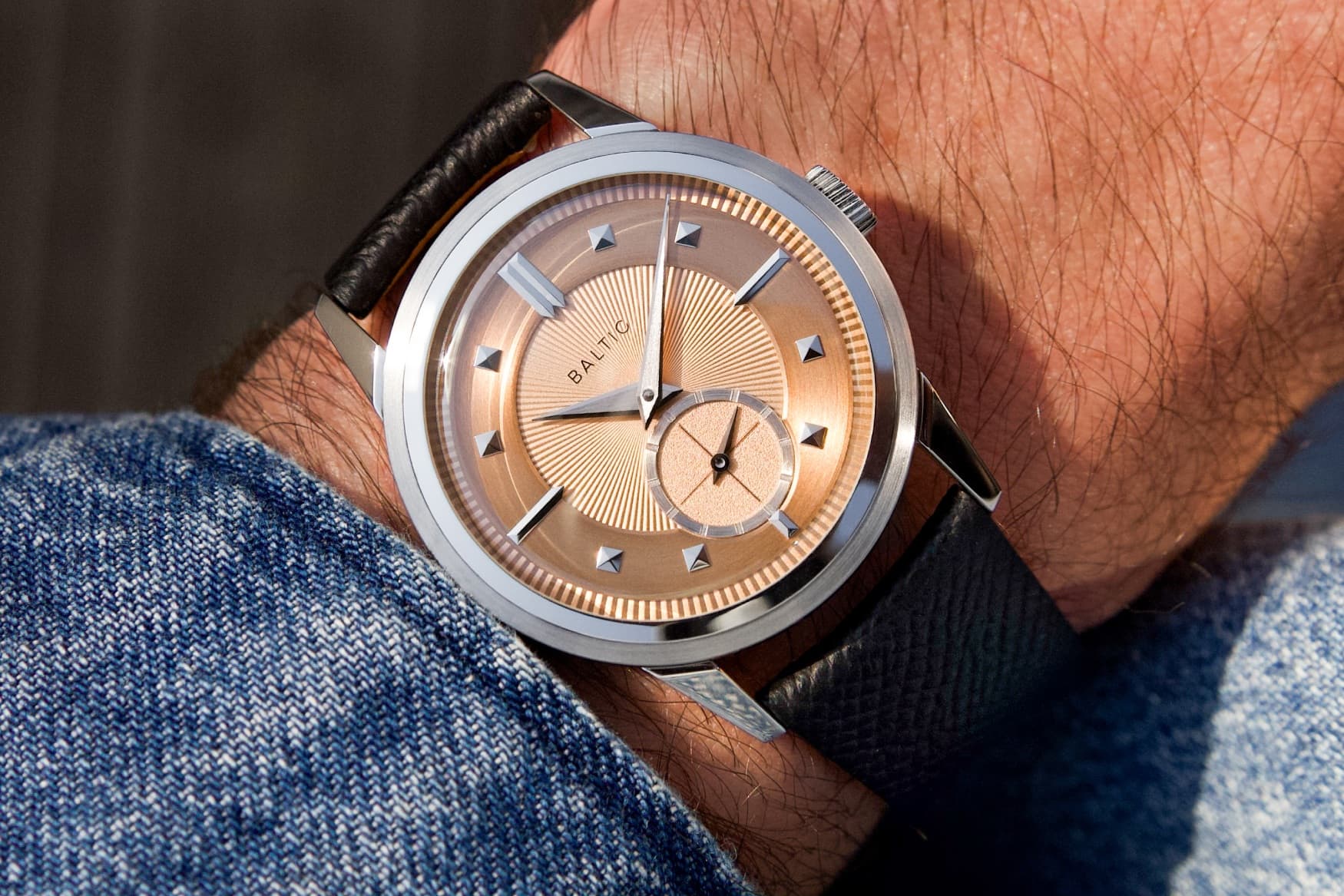
In the fast-moving world of horology, few brands have mastered the art of the 'vintage-modern' balance quite like the French powerhouse, Baltic. Since its inception, the brand has navigated the waters of mid-century divers and chronographs with surgical precision. However, with the release of their latest flagship dress piece, they have pivoted toward a more geometric, architectural era. In this Baltic Prismic review, we dive deep into a timepiece that doesn't just reference the past—it deconstructs it. By blending the high-glamour aesthetics of the 1930s with cutting-edge material science, Baltic has created what many are calling the definitive microbrand dress watch of 2025.
The Architectural Soul: Case Construction
When you first get the Baltic Prismic in for a wristshot, the immediate takeaway isn't just the dial—it’s the complexity of the case. Unlike the standard monobloc cases found on most 'beaters' or entry-level luxury pieces, the Prismic utilizes a sophisticated five-part construction. The mid-case is crafted from Grade 5 titanium, chosen for its lightness and its ability to be finished with a grainy, matte texture that contrasts sharply against the polished 316L stainless steel of the bezel, lugs, and caseback.
This juxtaposition of materials creates a 'prismatic' effect, where light is caught and refracted at various angles. For the enthusiast who obsesses over finishing, the way the polished steel lugs appear to 'float' against the darker titanium mid-case is a masterclass in modern design. At 36mm in diameter, it hits the sweet spot for a contemporary dress watch, leaning into the trend of smaller, more sophisticated proportions that have dominated the forums lately.
A Dial That Dances with Light
The heart of the Baltic Prismic review must center on the dial. Art Deco was defined by its use of geometric patterns and bold, contrasting textures, and Baltic has leaned into this wholeheartedly. The dial is composed of several layers, featuring a brushed outer sector for the hour markers, a guilloché-style graining in the center, and a sub-seconds register at 6 o'clock that boasts a circular-grained finish.
Whether you opt for the vibrant purple, the classic salmon, or the deep 'slate' blue, the applied indices are the stars of the show. These 'tooth' shaped markers are high-polished and faceted, catching the smallest amount of ambient light. While there is no lume to speak of—fitting for a pure dress watch—the legibility remains surprisingly high due to the sheer amount of reflected light from the handset and indices. It feels less like a simple time-telling tool and more like a piece of jewelry designed for the modern 'desk diver' who wants to transition seamlessly from the office to a black-tie gala.
Technical Specifications
To understand the value proposition of the Prismic, one must look at the internal components and the physical footprint. Baltic has opted for a tried-and-true Swiss manual-wind caliber to keep the profile slim and the engagement high.
| Feature | Specification |
|---|---|
| Caliber | ETA Peseux 7001 (Manual Wind) |
| Case Material | Grade 5 Titanium & 316L Stainless Steel |
| Dimensions | 36mm Diameter, 44mm Lug-to-Lug, 9.2mm Thickness |
| Water Resistance | 30 Meters (3 ATM) |
| Complications | Small Seconds at 6 o'clock |
| Glass | Double Domed Sapphire Crystal |
| Bracelet/Strap | Brushed/Polished Mesh Steel or Italian Calf Leather |
The Peseux 7001: A Purist’s Choice
Inside the Prismic beats the ETA Peseux 7001. In an era where many brands are rushing to fit chunky automatic movements into every case, Baltic’s decision to use a manual-wind caliber is a nod to the purists. The 7001 is a legendary ultra-thin movement, allowing the Prismic to sit just 9.2mm off the wrist (including the domed sapphire crystal).
Winding the watch becomes a tactile daily ritual—a moment of connection between the wearer and the machine. While it may not have the 70-hour power reserve of some modern 'grail' watches, its 42-hour reserve is more than sufficient for a piece intended for focused wear. Through the exhibition caseback, you can see the neat finishing of the movement, which, while industrial, remains clean and aesthetically pleasing, matching the overall architectural vibe of the watch.
Comfort and Versatility on the Mesh
One cannot conduct a thorough Baltic Prismic review without mentioning the 'Braided' steel bracelet. While the watch looks stunning on a tapered leather strap, the mesh bracelet is where the Art Deco theme truly comes alive. It is remarkably supple, conforming to the wrist with a silk-like quality that rivals bracelets from brands at triple the price point.
The 20mm lug width tapers down significantly, maintaining the vintage silhouette. On the wrist, the lightness of the titanium mid-case combined with the flexibility of the mesh makes the watch almost disappear. It is the antithesis of a heavy, clunky sports watch; it is refined, intentional, and incredibly comfortable for long-term wear.
The Value Proposition: Is it a 'Grail' or a 'Beater'?
In the current market, the Baltic Prismic occupies a unique space. It is too well-finished to be a mere 'beater,' yet its price point remains accessible enough that it doesn't require the decade of saving usually associated with a 'grail' watch. It competes directly with the likes of Longines and even entry-level Cartier, offering a level of case complexity that those heritage giants often reserve for their higher-end collections.
For the collector who appreciates the patina of vintage designs but demands the reliability and water resistance of a modern build, the Prismic is a compelling argument. It avoids the 'homage' trap by creating a visual language that feels uniquely Baltic. It isn't trying to be a Patek Philippe Calatrava or a Vacheron Constantin Historiques; it is confidently itself.
Final Verdict: An Art Deco Triumph
As we look at the landscape of horology in mid-2025, it’s clear that the 'integrated bracelet sports watch' craze has cooled, making room for the revival of the elegant dress watch. The Baltic Prismic is leading that charge. It offers a masterclass in how to use modern materials like titanium to enhance a classic aesthetic rather than replace it.
Between the multi-textured dial, the manually wound Swiss heart, and the sheer charisma of its 36mm frame, the Prismic is a testament to what microbrands can achieve when they stop chasing trends and start setting them. Whether you are adding to a seasoned collection or looking for your first 'serious' mechanical watch, the Prismic offers a level of charm and sophistication that is hard to ignore. It is a piece that demands to be looked at, worn, and appreciated for the intricate piece of wrist-art that it is.
For those seeking a blend of 1930s elegance and 2020s engineering, the search may well end here. The Prismic is more than just a watch; it is a statement on the enduring power of Art Deco design.